 EXLANTIX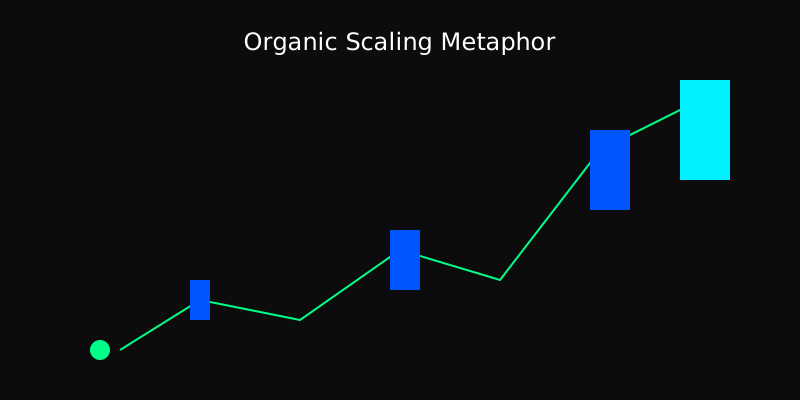
Growth is the primary objective of almost every digital venture. But "growth at all costs" creates technological cancer—uncontrolled proliferation of disorganized code, redundant features, and confusing user experiences. At Exlantix, we champion Organic Scalability: growth that follows a genetic blueprint.
The Architecture of the Seed
A seed contains the entire plan for the massive tree it will become. It doesn't need to be 100 feet tall on day one, but its DNA is coded for that potential. Similarly, our software must be "seed-architected." This means choosing modular patterns from the start. A monolith can serve a startup, but only if that monolith constitutes a clearly defined module of a future distributed system.
Refactoring as Pruning
Scaling require subtraction, not just addition. Just as a gardener prunes branches to encourage healthy growth, we must aggressively delete dead code. We must simplify interfaces. We must deprecate features that no longer serve the core mission. This "pruning" channels energy (compute and developer attention) to the parts of the system that actually bear fruit.
Intentional Friction
Sometimes, we must introduce friction to scale safely. We might limit sign-ups to ensure server stability. We might enforce stricter code reviews as the team grows. This intentional slowing down prevents the catastrophic collapse that happens when a system outpaces its own structural integrity.
Scaling with purpose means asking "Why?" before "How much?" It means building architectures that don't just get bigger, but get better, smarter, and stronger as they expand.
Read more: Architecture, Map