 EXLANTIX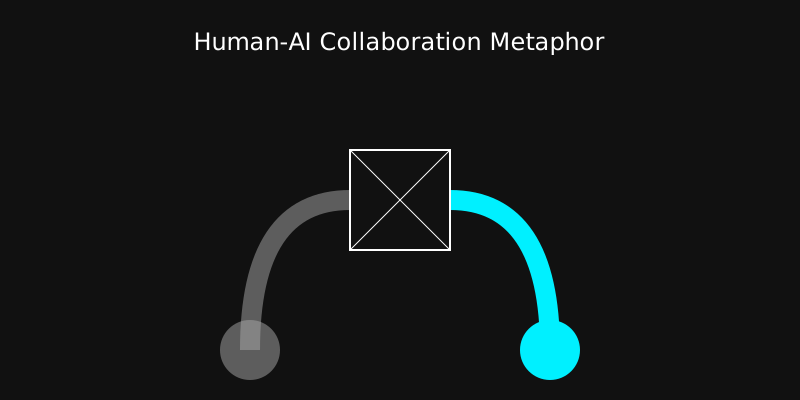
The narrative surrounding Artificial Intelligence often fluctuates between utopian salvation and dystopian replacement. At Exlantix, we reject this binary. We view AI not as a replacement for human creativity, but as the ultimate Construction Catalyst. It is the exoskeleton for the mind, allowing architects of systems to build taller, faster, and more securely than ever before.
The Multiplier Effect
In traditional coding, a developer's output is limited by typing speed and memory recall. With an AI partner, the developer becomes an orchestrator. The focus shifts from syntax to intent. We are no longer laying bricks; we are designing cathedrals, and the AI is the army of masons executing the vision. This multiplier effect allows small teams to achieve the scale and complexity previously reserved for tech giants.
Constraint as Creativity
Paradoxically, AI thrives on constraints. When we provide clear boundaries—strict type systems, ethical guidelines, specific architectural patterns—the AI performs better. It forces us to be more precise in our definitions. We must articulate exactly what we want, and in doing so, we often discover flaws in our own thinking. The AI acts as a mirror, reflecting our logic back to us instantly.
The Human Element: Judgment
If AI generates options, the human provides judgment. The ability to discern "correct" from "optimal," "functional" from "beautiful," remains strictly human. An AI can suggest ten ways to scale a database; only an experienced engineer understands the subtle trade-offs involving team culture, budget, and long-term business goals.
Innovation happens in this feedback loop. The human prompts, the AI iterates, the human refines. It is a dance of high-speed trial and error that accelerates evolution. At Exlantix, our Laboratory is dedicated to perfecting this dance.
We are not afraid of the machine. We are taking the wheel.
Read more: Laboratory, AI Section